




If you’ve been publishing content, investing in advertising, and optimizing product pages for months without seeing consistent results in organic traffic, the problem is almost never where you’re looking. Most ecommerce businesses that come to consultancy with stagnant traffic don’t have a content strategy problem: they have a technical and structural problem that is canceling out everything else. SEO doesn’t work in independent layers; if the foundation fails, the rest of the building won’t rise.
Signals that indicate an ecommerce needs an urgent SEO audit.
Drop in organic traffic with no apparent cause
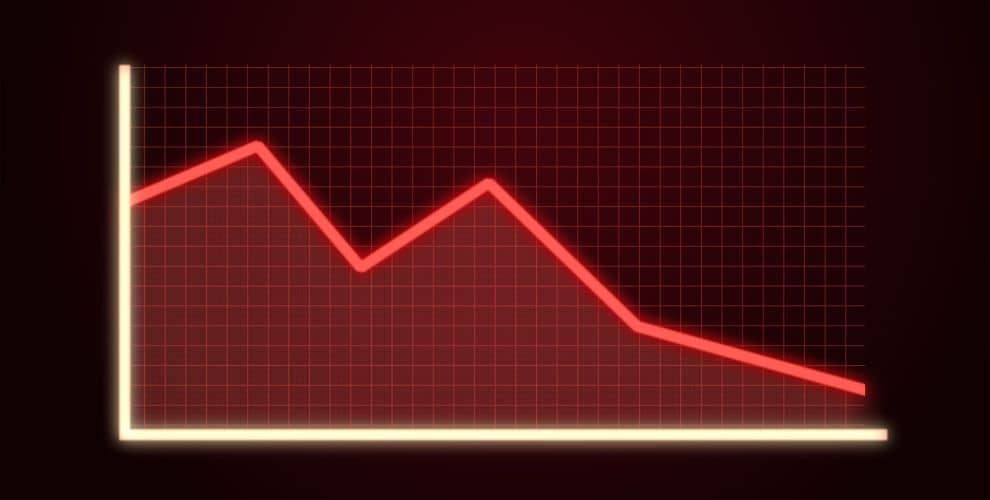
The most obvious signal, and yet the most misunderstood. When organic traffic drops between 15% and 20% over a period of four to six weeks without any visible changes in your store, the usual reaction is to blame a Google algorithm update. Sometimes that’s correct. But in most cases I’ve analyzed, the drop has a traceable technical cause: a poorly executed platform migration that didn’t preserve redirects, a theme update that broke the rendering of dynamic content, or an accidental mass reindexing caused by a change in the robots.txt file or in noindex meta tags.
What to do: open Google Search Console and compare the drop period with the previous one in the Performance report. Cross-check the dates with your platform change history. If the drop coincides with a technical update, you’ve found your starting point. If you don’t find a correlation, enable coverage alerts and check whether pages have moved from indexed to excluded.
Category and product pages not ranking for any transactional keywords
Having informational traffic from your blog is good, but revenue in ecommerce comes from transactional traffic. If your category and product pages are not appearing in top results for keywords with clear purchase intent, there are several possible causes that an audit must diagnose.
The most common in 2025 is keyword cannibalization: multiple URLs competing for the same search intent. This happens when you have a category page, a tag page, a filtered collection page, and a blog post targeting the same keyword, with none having enough authority to stand out over the others.
What to do: export all your URLs using a tool like Screaming Frog and cross-reference them with Search Console data. Look for groups of pages with impressions for the same keywords. If you find three or more URLs sharing impressions for a single transactional keyword, you have cannibalization that is diluting your authority.
Indexation rate below 70% of the sitemap
This metric often surprises store owners: having thousands of URLs in your sitemap does not mean Google is indexing all of them. In fact, for ecommerce sites with large catalogs, it’s common to find indexation rates below 50% without anyone noticing.
The causes vary: improperly canonicalized faceted navigation URLs, pagination pages that Google chooses not to follow, discontinued products returning 200 instead of 404 or 410, or pages with duplicate content that the algorithm discards as low-value variants.
What to do: in Search Console, go to Indexing → Pages and compare the number of indexed pages with the total URLs in your sitemap. Any ratio below 0.7 requires investigation. Export pages in the “Excluded” state and classify them by reason: “Page with redirect”, “Alternate page with proper canonical hreflang tag”, “Crawled – currently not indexed”… Each reason points to a different type of issue.
Load time above 3 seconds on mobile

An LCP above 2.5 seconds on mobile devices is not just a user experience issue. Since Google completed the transition to mobile-first indexing, mobile performance is a direct ranking signal.
Many ecommerce sites monitor speed from desktop on a fiber connection in the office and see acceptable numbers. But real users, on average devices with 4G, are waiting five or six seconds to see the first meaningful content. That discrepancy remains invisible until you measure with real CrUX data.
What to do: use PageSpeed Insights with the URL of your most important category page, not the homepage. The homepage is often over-optimized; category pages better reflect real site performance. If field data shows LCP above 2.5 seconds or INP in the red, you have a Core Web Vitals issue that Google is already actively penalizing in rankings.
Duplicate content between product and category pages
Duplicate content in ecommerce doesn’t always come from copying supplier descriptions, although that remains a common issue. In many cases, it originates from the platform architecture itself: the same product appears in multiple categories generating different URLs, price or size filters create URL variants without proper canonical parameters, or pagination pages repeat the title and meta description of the main category page.
Google distributes relevance signals across multiple URLs instead of consolidating them into one when duplicate content exists, which effectively weakens the ranking of all of them.
What to do: use Screaming Frog with the duplicate content module enabled and filter by repeated titles, meta descriptions, and H1 headings. Pay special attention to URLs generated by faceted navigation filters: they account for around 40% of duplication cases I find in medium and large ecommerce audits.
Your direct competitors are gaining positions while you remain static
This signal is harder to measure but equally relevant. If you’ve seen no movement for six months in keywords where you previously held stable positions, while competitors in your segment consistently improve, there are two possible explanations: they are doing something you are not, or you have a structural issue limiting your natural growth.
Distinguishing between the two requires a content gap and domain authority analysis, but the first step is always to review your own technical state before looking outward. In 80% of the stagnation cases I’ve analyzed, the issue was internal.
An SEO audit is not a cost; it’s a diagnosis. If you recognize two or more of these signals in your ecommerce, don’t wait. Technical SEO has inertia: issues not resolved today will continue to cost you rankings in the coming months. At Innovadeluxe, we handle the SEO of your ecommerce. Contact us!
Related Posts





Leave a comment