



The way people search online is changing: more and more users don’t want “10 blue links” — they want a direct answer. That’s pushing Google (AI Overviews), assistants (Copilot, Gemini), and chat-style engines to synthesize information and, at best, cite sources or recommend brands. That’s where GEO (Generative Engine Optimization) comes in: optimizing your digital presence so AI can understand you, consider you trustworthy, and include you in its response.
In e-commerce, this isn’t just about “pretty content”: it’s about structuring your catalog, strengthening authority, answering real questions, and making it easy for systems to extract “citable blocks” (definitions, lists, steps, comparisons) frictionlessly.
Table of contents
- 1 What is GEO (and how is it different from traditional SEO)?
- 2 How does AI “choose” who to cite?
- 3 1) Create “citable blocks” on category and product pages
- 4 Strengthen E-E-A-T: in GEO
- 5 Mark up your content with structured data
- 6 Optimize for conversational questions (real prompts)
- 7 External authority: earn mentions
- 8 How to measure whether you’re winning at GEO
- 9 Quick checklist
What is GEO (and how is it different from traditional SEO)?

SEO aims to rank you in the top results of search engines. GEO aims to make your brand and content referenced by AI.
In practice, this involves three parts:
- Crawlability: your pages should be crawlable, indexable, and “understandable”.
- Answer readiness: your content should be designed to answer questions clearly and in an extractable format.
- Trust: your store should be a credible source (E-E-A-T + external signals).
How does AI “choose” who to cite?
Even though each system is different, they generally converge on something like this:
- Semantic coverage: does your content satisfy the intent well?
- Structure: are there easy-to-extract snippets (lists, steps, tables, definitions)?
- Evidence: do you support claims with data, policies, specifications, and sources?
- Authority: does your domain or brand have a reputation and external mentions?
- Consistency: is your site consistent (same product, same info, same prices/policies)?
With that framework, let’s get practical.
1) Create “citable blocks” on category and product pages
In e-commerce, AI systems often rely on pages that:
- Define concepts (what X is),
- Answer comparative questions (X vs Y),
- Recommend based on context (when X is the right choice),
- Clarify usage, compatibility, maintenance, warranties, and returns.
GEO template for category pages
Add a block near the top or middle of the category page like:
- What is [category] (2–3 sentences max).
- How to choose [category] (a list of 5–7 criteria).
- Top mistakes when buying [category] (bullet list).
- Recommendations by profile (if you’re a beginner… if you want premium… if you need X…).
- Short FAQ (4–6 questions).
This kind of structure is what optimization checklists recommend for answer/AI environments: clarity, real questions, and a scannable format.
GEO template for product pages
In addition to the “marketing” description, include a technical block and a decision-making block:
- 3-line summary: what it is + who it’s for + main benefit.
- Specifications (table or list).
- Compatibility / use cases (very important for AI).
- Pros and cons (yes — “cons” increases credibility).
- Care / maintenance (if applicable for the product type).
- Warranty, shipping, returns: easy to find and consistent.
This doesn’t just help AI: it improves conversion and reduces returns and support requests.
Strengthen E-E-A-T: in GEO
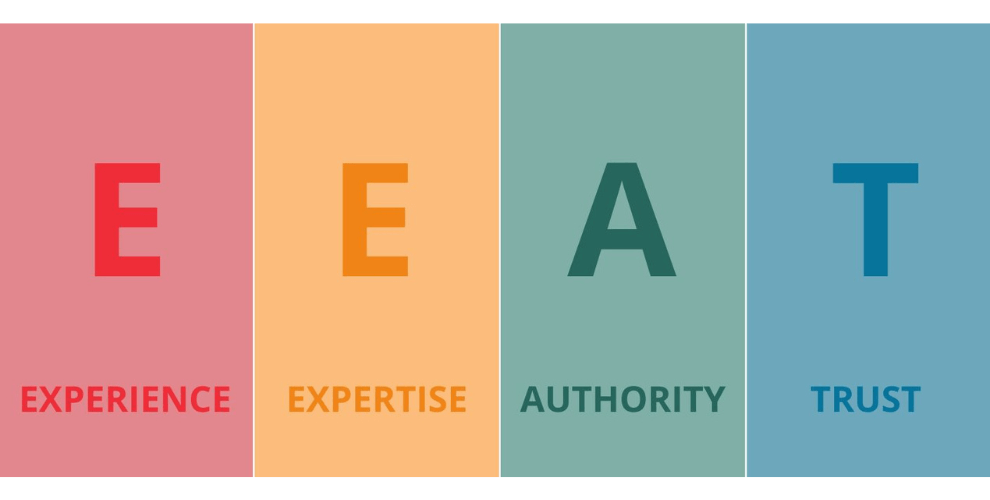
If you want AI to use you as a reference, your website should “look” (and be) a trustworthy source. Below are some signals we consider key:
- About us with names, experience, and specialization (e.g., “Shopify/PrestaShop specialists since…”).
- Company details: legal entity name, address, contact channels, business hours.
- Clear policies: shipping, returns, warranty, privacy/cookies.
- Authors on informational content such as the blog (short bio and experience).
- Social proof: verified reviews, real case studies, quality/trust badges, media mentions.
Many GEO/AI-SEO guides emphasize that being “citable” requires authority and reputation—not just well-written text.
Mark up your content with structured data
If AI can “understand” your content better, the likelihood of being selected increases. In e-commerce, pay special attention to:
- Product (price, availability, brand, GTIN if you have it).
- AggregateRating/Review (if you have reviews).
- BreadcrumbList (clear architecture).
- FAQPage on informational landing pages (when relevant and without spam).
- Organization / LocalBusiness for company details.
Note: poorly implemented schema can do more harm than good. Prioritize quality and consistency with what users actually see.
Optimize for conversational questions (real prompts)
Most AI answers are triggered by queries such as:
- “What is the best PrestaShop SEO module?”
- “What’s the difference between PrestaShop and Shopify?”
- “What do I need to get started with Shopify?”
- “How do I choose a PrestaShop module for GDPR compliance?”
Turn that into content:
- comparative guides (A vs B),
- “best X for Y” guides (with transparent criteria),
- “how to choose…” content,
- glossaries and quick definitions.
This connects with AEO (Answer Engine Optimization), which focuses on being the answer. In practice, GEO and AEO overlap heavily.
A recurring pattern: AI systems tend to rely on sources with reputation and external signals (mentions, links, citations). Useful actions for e-commerce include:
- Digital PR in industry media.
- Collaborations with experts.
- Well-optimized directories and business listings.
- “Linkable” content: original studies, benchmarks, methodology-based comparisons.
It’s not about “more links,” but about better contexts where your brand appears associated with the topic.
How to measure whether you’re winning at GEO
As of today, there isn’t a universal “ChatGPT Search Console,” but you *can* measure signals:
- Brand prompts: test queries weekly like
“best agencies/prices/stores for [your category]” and log any mentions. - Referral traffic from AI/tools (when available).
- Growth in branded searches (if you’re mentioned more, people will search for you more).
Presence in AI Overviews (if your niche already shows them), using visibility tracking tools.
Quick checklist
- Add a “What it is / How to choose / FAQ” block to your top 10 categories.
- Add a “Summary + specs + compatibility + pros/cons” block to your top 20 products.
- Create a strong “About us” page + complete, consistent policies.
- Validate Product + Breadcrumb + Organization schema markup.
- Publish 5 “A vs B” comparisons and 5 “best X for Y” guides.
GEO isn’t about “tricking” AI—it’s about optimizing your e-commerce site so AI can reference it. If your content answers real questions, provides evidence and is well structured so it can be understood quickly, you increase your chances of appearing in generative answers and assistants. At IDX Innovadeluxe, we know how to do it. If you want to improve GEO and SEO for your e-commerce, contact us.
Related Posts





Deja un comentario